blog

What I'm thinking about

Welcome to my blog! This is mostly a link blog, where I share links to articles and websites that I would otherwise share with my IRL friends. From time to time, I also write my own posts and longer-form entries. You can also subscribe to this blog in an RSS feed reader.

Here are the topics I tend to cover. →


Harness engineering: leveraging Codex in an agent-first world


🔗 a linked post to openai.com » — originally shared here on

What we don’t yet know is how architectural coherence evolves over years in a fully agent-generated system. We’re still learning where human judgment adds the most leverage and how to encode that judgment so it compounds. We also don’t know how this system will evolve as models continue to become more capable over time.

What’s become clear: building software still demands discipline, but the discipline shows up more in the scaffolding rather than the code. The tooling, abstractions, and feedback loops that keep the codebase coherent are increasingly important.

Our most difficult challenges now center on designing environments, feedback loops, and control systems that help agents accomplish our goal: build and maintain complex, reliable software at scale.

There's this very vocal camp of engineers on the internet who like to say things like "it was never about how fast I can type code" and share visceral takedowns of how sloppy and terrible vibecoding and agentic engineering codebases become over time.

I agree with their observations: over time, every vibecoded piece of software I've built becomes shelfware, artifacts of code which served a purpose but is no longer needed.

But I've been programming computers long enough to know that concerns about architecture and sane codebases end up bugging people so much that they invent new techniques to address them.

I am approaching agentic engineering just like I approached using a chainsaw for the second time in my life a couple weeks ago: by consuming a lot of videos and blog posts on how other people are doing it, and then running controlled experiments to see what works for me.

Continue to the full article


The Moylan Arrow: IA Lessons for AI-Powered Experiences


🔗 a linked post to jarango.com » — originally shared here on

Information allows us to act more skillfully. Imagine you come to a fork on a road. Without a sign, you’d need a compass or a great sense of direction to choose correctly. But with a clear sign, you’d quickly know which road to take. The sign reduces ambiguity.

The Moylan arrow, too, disambiguates a choice. Pulling in on the wrong side of the pump is an annoying inconvenience. By making the driver smarter, the arrow improves the car’s UX. Critically, it does so without much cost to the manufacturer. That’s why it’s become pervasive.

The Moylan arrow works because it’s:

  • Clear: legible and understandable
  • Findable: located where you’re already looking
  • Relevant: provides the exact answer you need
  • Contextual: available when needed, but “quiet” otherwise
  • Obvious: doesn’t need further instructions
  • Cheap: of negligible cost to manufacturers

Jorge goes on to compare this list to the latest crop of chatbots and finds it comes up lacking.

I found this set of heuristics helpful:

Rather than ask, “how might we add AI to this system?,” consider the following questions:

  • What is the person trying to do?
  • Do they understand the system?
  • What’s keeping them from choosing skillfully?
  • What questions do they have? Which come up repeatedly?
  • Which structural distinctions are ambiguous?

Continue to the full article


People Cannot Pay Attention


🔗 a linked post to utcc.utoronto.ca » — originally shared here on

Sometimes, people in technology believe that we can solve problems by getting people to pay attention. This comes up in security, anti-virus efforts, anti-phish efforts, monitoring and alert handling, warning messages emitted by programs, warning messages emitted by compilers and interpreters, and many other specific contexts.

We are basically always wrong.

Continue to the full article


Current Vibes - May 2026

originally shared here on

I jumped head first into the punk/metal pool this month. Here's what's been bumping on repeat for me lately:

Less Than Jake - Anthem

I remember a friend of mine (whose birthday is today, ironically) playing this album in his basement on repeat as we tried to 100% Super Mario 64. Good, clean ska fun. Most of the albums on this list contain songs that I haven’t really listened to, but while chopping up the tree in the back yard these last couple weeks, I’ve had time to immerse myself. And I gotta say, listening to the lyrics of “She’s Gonna Break Soon,” I found myself with a literal lol.

Neck Deep - Life’s Not Out to Get You

I was working out of a Starbucks near my parents house this week and listened to this album the entire day while coding. I reached out to them in the morning to see if they wanted to grab lunch, and sure enough, an hour later, we were at Snuffy’s Malt Shop where my dad peer pressured me into eating a malt. The album whales too.

Mumford and Sons - Prizefighter

My Current Vibes playlist contains albums for every mood, and this album fills the mood for “Sunday morning.” There are a couple of songs that hit right when I need them: Alleycat asks: “’Is this all there is?’ What do you mean, is this not enough for you?” Clover reminds me to “slow down.” Cannot wait to see them again this summer!

The Wonder Years - The Greatest Generation

I Just Want to Sell Out My Funeral came across KTIM while I was cleaning out my garage1, and I fell over myself to add this album to current vibes. It turns out that particular song combines elements from several other songs on the album. I dunno, I used to dog on myself for enjoying emo, but 38 year old Tim ain’t got time to dog on hisself anymore. I’m in my emo era.

Thrice - The Artist in the Ambulance

I played an unreal amount of Madden ’04 as a kid, and that’s how I discovered Thrice. I think this album is classified as “post-hardcore”, but there’s hints of emo and pop-punk in there as well. So many of these songs bring me back to high school.

System of a Down - Toxicity

Again, brings me right back to high school. We’re working towards converting the garage into a music zone; as soon as that’s good to go, I’m gonna fill it with a drum kit and play this album front to back. Terribly, but enthusiastically.

The Rezillos - Can’t Stand the Rezillos

If I had to pick a number one album right now, it’s this one. Still makes me chuckle thinking about discovering this one from a “What’s in your Bag” segment at Amoeba Records with Tony Hawk. My favorite song right now is ​(My Baby Does) Good Sculptures​, which makes me think of my wife every time I hear it.

Pynch - Howling at a Concrete Moon

Another one that’s been on the Current Vibes rotation for a couple years now. 2009 is how I discovered this band, but there’s really not a bad song on this album. Some of these albums are useful for processing how depressing our world can be, and Pynch has a natural ability to write lyrics that speak to finding your way in spite of the hardship. Put another way: listening to this album makes me feel less lonely.

Pynch - Beautiful Noise

This album is less cynical than its predecessor Howling at a Concrete Moon while maintaining the relatable storytelling. I get Post-Punk / New-Wave stuck in my head a lot.

New Found Flory - Listen Up!

I’m so glad these boys are still rocking as hard as they were back in high school. The lyrics in this album are chock full of uplifting messages (​Laugh It Off​ reminds us to not take life so seriously, You Got This is self evident, 100% reminds me of the ‘Do The Thing’ theme of this summer).

Kisses - The Heart of the Nightlife

I burned this album to a CD-R back in college and listened to it constantly. It was another one that came across KTIM and it’s filled in the spot for “music to groove to while doing housework”.

I Prevail - Lifelines

I got to see my nephew play baseball last weekend. These 10/11 year olds have ​walk up music​. Can you believe that? The high school one town over just got a jumbotron. Freaking wild. Anyway, someone’s walkup song was Chaos and I had to Shazam it. This album reminds me of ​Hybrid Theory​: a genre-blurring record with screaming and melody, metal and electronic. I guess it’s “metalcore”.

The Cords - The Cords

Music that sounds upbeat and positive with depressing and hopeless lyrics is extremely compelling to me. I know I’ve said this about this album in the past, but I was hooked on this jangle pop album from the first 8 bars. October is my current favorite jam (“It’s not that it’s gone, it’s just not the same as it was” hits hard).

Cheekface - It’s Sorted

Similar to Pynch, I listen to this album and feel less lonely. ​Popular 2’​s observations about everyone being the unwitting stars of several Ring camera movies makes me snort laugh every time I think about it. I also frequently get I Am Continuing to Do my Thing stuck in my head. Excited to see these guys in October!

blink-182 - ONE MORE TIME...

Everything I wrote about New Found Glory’s new album applies to this one. ANTHEM PART 3 continues to be the theme for 2026.

The Beths - Straight Line Was A Lie

Everything I wrote about The Cords and Pynch applies to this gang as well. I saw them perform around my birthday last year, and I still often think about how the backing vocals aren’t actually Elizabeth, but rather the boys singing falsetto. If I were going to be in a band, I’d want to be a drummer for a band like this. Or The Rezillos. Or Cheekface. Or The Cords. Or System of a Down. Maybe blink, if I practice a lot.


If any of these albums or descriptions remind you of other albums, shoot them my way!

  1. KTIM is what I’ve decided to call “shuffle all tracks” on Plex. Turns out when you spend several years curating a music collection, you don’t need a big tech algorithm to surface new music: “shuffle all” works pretty dang well. And I call it KTIM because I have always wanted to be a radio DJ, and if I were to file for an FCC license, my radio station would start with a K instead of a W because of where I live. The more you know! 


"But it happened."


🔗 a linked post to youtube.com » — originally shared here on

A must-watch video from Casey Muratori reflecting on the commencement speech where Eric Schmidt, founder of Google, was booed when encouraging students to adopt AI.

This is a case where he had direct decision-making authority during the time period when the very worst most dystopian parts of the technology business model were developed, perfected and entrenched.

He is giving this commencement speech to a group of students who have known nothing but that their whole lives. They're not like me. They didn't know a time before all of this. They didn't experience technology in the 80s or something like this. So all they know is the dark pattern version. All they know is the one where they don't own anything and their data is kept by other people and their behavior is tracked and their data is sold and they are targeted for advertising. That's what they know about technology. That's what technology is like for them and only that.

Eric Schmidt, one of the primary architects, is now looking them in the eye with a straight face and saying, "You should be enthusiastic about the next new wave of technology. You should want to be in the room and make decisions about how that new technology will go. And you should bring your humanity with you and your good judgment about how we can do things in a way that will benefit all of us and be good for all of us."

Well, yeah, but why didn't Eric Schmidt do any of that? He just said in the first part of the commencement speech that there were all these really bad things that happened on his watch and he was in the rooms the entire time. He was in one of the most important rooms where these decisions were being made and he either didn't want to or couldn't stop any of that from happening.

So if he wanted to pass on something valuable to these students... well, that would have been the thing. It would have been the introspection of what went wrong. Why did he fail? Why did he say "okay" to building this very bad aspect of technology on top of the useful tool? The parts that we all think are actually good. Why didn't he stop that part? Why doesn't he take some responsibility for it?

If you are gonna take credit (and win capitalism) for building Google, you gotta take credit for all of it. Looking back in 2026, was the invention of Google a net-positive for society? How about Microsoft, or Apple, or Meta?

(Props also for the excellent Tim Robinson reference, which captures the essence of what's going on here.)


Choosing to Stay Human


🔗 a linked post to oneusefulthing.org » — originally shared here on

A lot of the problem is going to come down to us. To be clear, I am cool with a lot of cognitive surrender. I don’t remember phone numbers anymore because my phone does that for me. I am happy my kids didn’t need to learn cursive. I am fine with calculators doing my daily math and my computer figuring out how to schedule my classes. These were once useful skills, but we were probably right to get rid of them.

AI is different because the technology is general enough that virtually any cognitive task can be offloaded into it to some degree. I don’t want to be too precious about writing: there is no principle that says a polished email draft has to come out of a human mind any more than a column of arithmetic has to. But we don’t want to give up everything, and that we mostly don’t know yet, for any specific task, what is important and what is not. Deciding that is going to be a real challenge.

My north star with technology is “am I making the computer do something useful to somebody?”

Useful, as Ethan Mollick touches on here, is the difference between “AI solved the problem for me” and “a personalized AI taught me this hard thing in a way that stuck for me.”

I’m not gonna dog on anyone who likes to write code. It’s therapeutic, it’s constant problem solving, it forces you to understand how something works.

I think software engineers tend to loudly express strong opinions that don’t meaningfully improve the problems that most people have.

AI, like every other tool, comes down to the human that is wielding it.

Continue to the full article


Maybe Don’t Talk to the New York Times About Zohran Mamdani


🔗 a linked post to lithub.com » — originally shared here on

In contexts not concerning the elite private colleges of New England and their decades-old conflicts and syllabi and on-campus squabbles, this mode of prestige media procedure matters absolutely and enormously, at scales difficult to tabulate. It’s not hard to call them all to mind: “Climate change is increasingly lethal, though critics say… it is not.” Or, “Israel is murdering journalists in Gaza at historically unprecedented rates, though critics say… it is not.” Or, “Trans people claim to be real, though critics say…”

Every bit of this is disheartening on its face. But it’s actually worse than any first-blush irritation, that familiar annoyance that comes from encountering still another textbook exercise in witless triangulation. Because what this sort of reporting ultimately means is that if you have enough money to get somebody, anybody, to produce a white paper for you, which you can then put on some think-tank stationery? Then, my friend, you are ready to enter into the rushing current of elite reportage.

Continue to the full article


I got a tattoo

originally shared here on

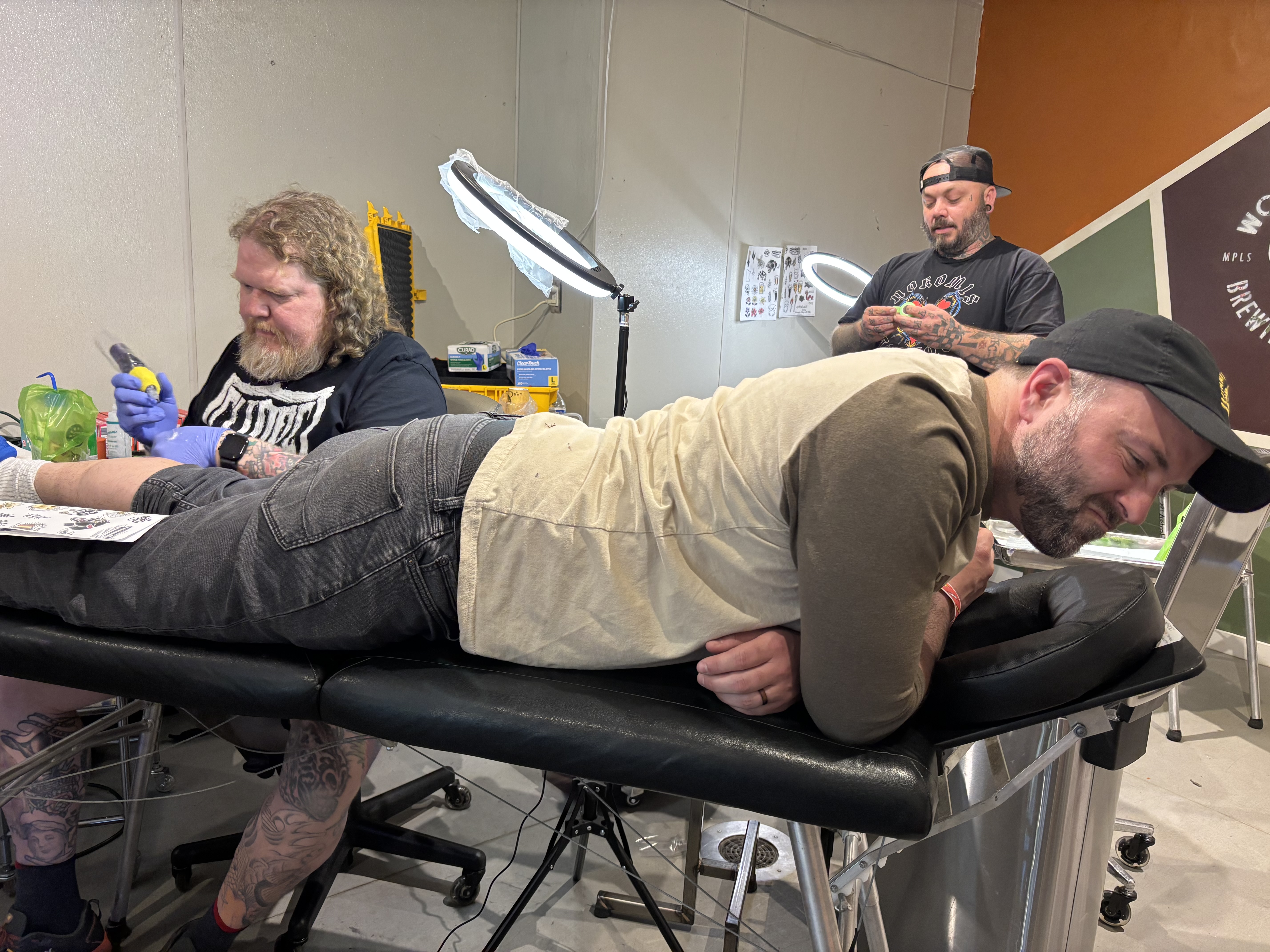
Me, wincing while getting my tattoo

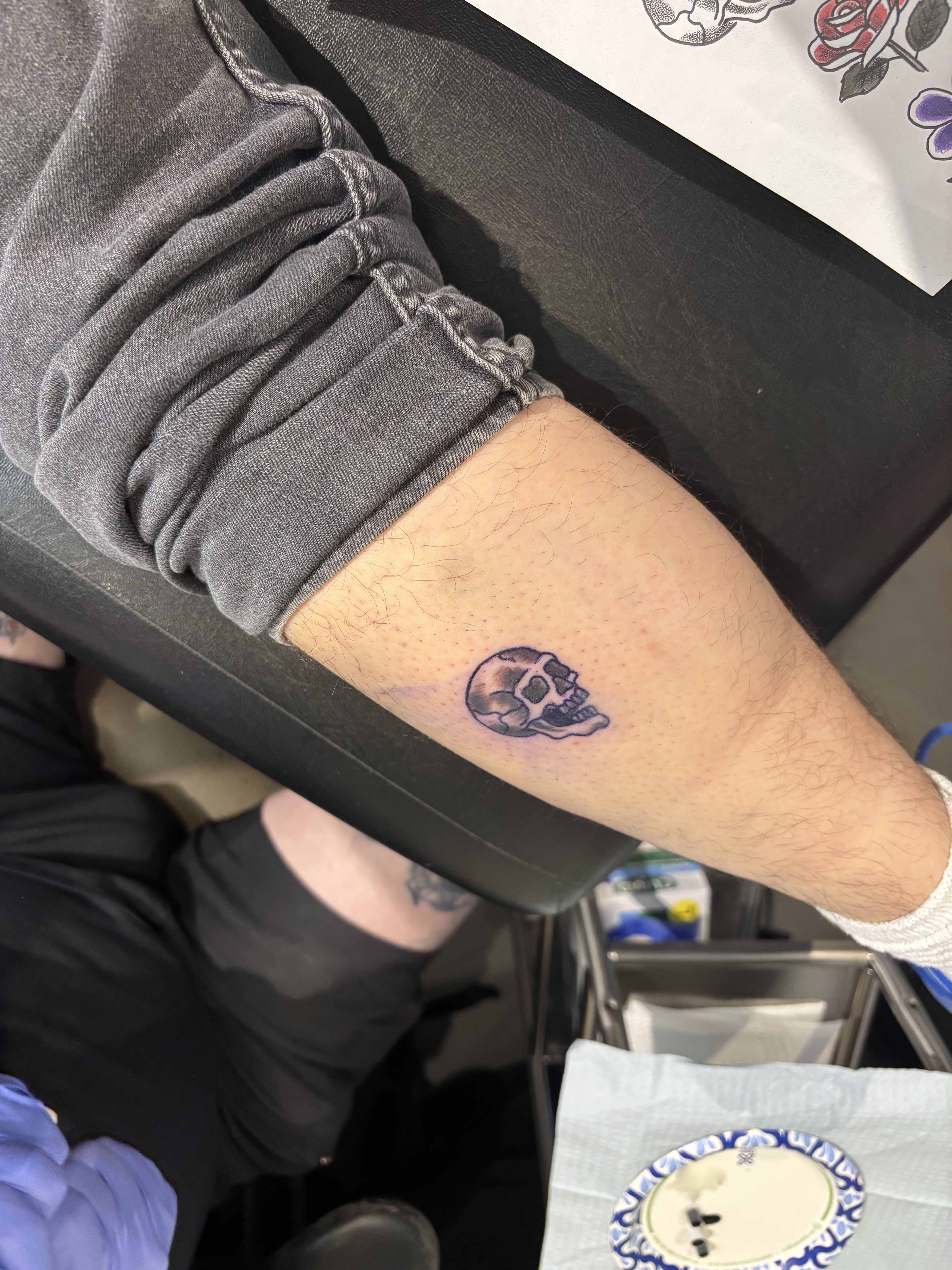
The final product: a skull on my calf

It's not yet summer, but I'm declaring 2026 to be the summer where I "Do The Thing."

Shannon and I have been talking about getting tattoos for years now. We went to a friend's brewery's anniversary party this past weekend, and they had a tattoo pop-up stand. You could pick from one of roughly 30 tattoos.

Mine was a no brainer: skulls have been a big part of my aesthetic lately, and this one looked perfect. Slightly smiling, like I always seem to be.

Shannon's choice, a marshmallow roasting on a flame, was similarly the perfect fit for her.

I'm very motivated to make this summer memorable. We're off to a good start.